Rivia Data Findings
Automated Clinical Data Review
Manual review across forms, domains, and sources surfaces issues late and puts database lock at risk. Built on Rivia Core, Data Findings uses Agents to create complex rules, flag issues proactively, and manage resolution in one governed workflow.
Trusted by clinical teams at








The Problem with Manual Data Review
Complex data checks across forms and domains still rely on programming and repetitive manual review, causing data issues to surface late and increasing database-lock risk.
Complex checks require extra effort
+
Some EDC systems support cross-form checks, but complex, multi-domain logic still relies on programming and manual review.
Issues are tracked manually
+
Data Managers repeatedly track and reconcile issues, then manually transcribe team review findings from spreadsheets into the EDC.
Problems surface too late
+
Growing data volumes make manual review harder to sustain, increasing late-stage clean-up and database-lock risk.
Make Data Review Timely and Iterative
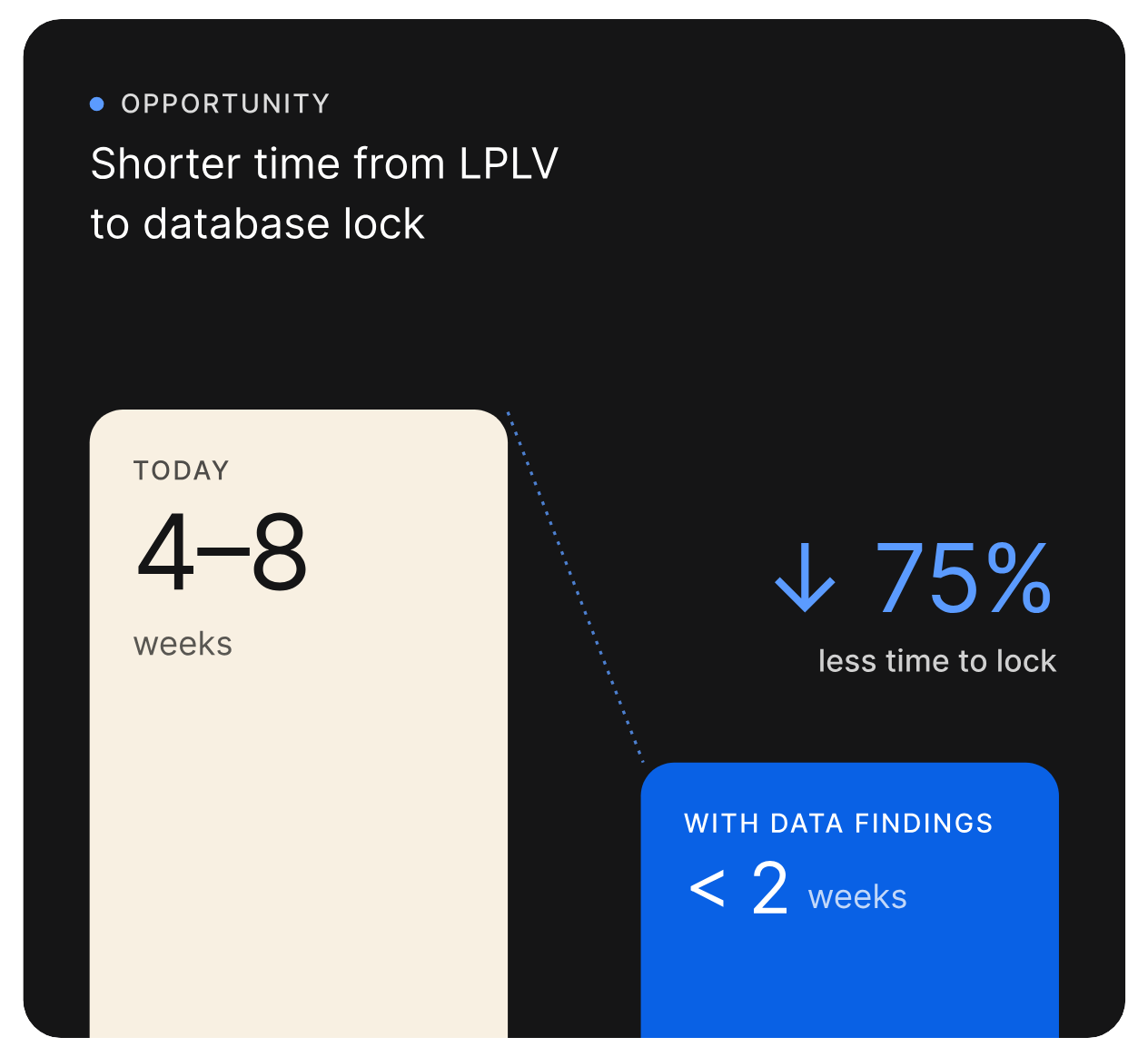
With real-time data ingestion, Data Findings helps teams identify issues and act throughout the study, rather than leaving clean-up until the end.
Issues are flagged as they arise instead of discovering them late in the trial, keeping review backlogs under control.
Surface signals and patterns so sponsor teams can investigate and take action earlier.
Resolve issues before lock to reduce late corrections and the risk of reopening the database.
Watch a Review Cycle End to End
Platform
How Data Findings Works
Data Findings brings rule creation, governance, automated findings, and resolution together in one governed data review workflow.
Build
Create data review rules and manage them in a central repository, providing the foundation to flag matching findings for review.
Govern
Manage version control, QC, approval history, and validation for every rule.
Surface
Surface findings against configured rules and keep their status updated as source data changes.
Resolve
Review, assign, and resolve findings in-platform, with status tracking and a complete audit trail of decisions and actions.
01
Build Rules
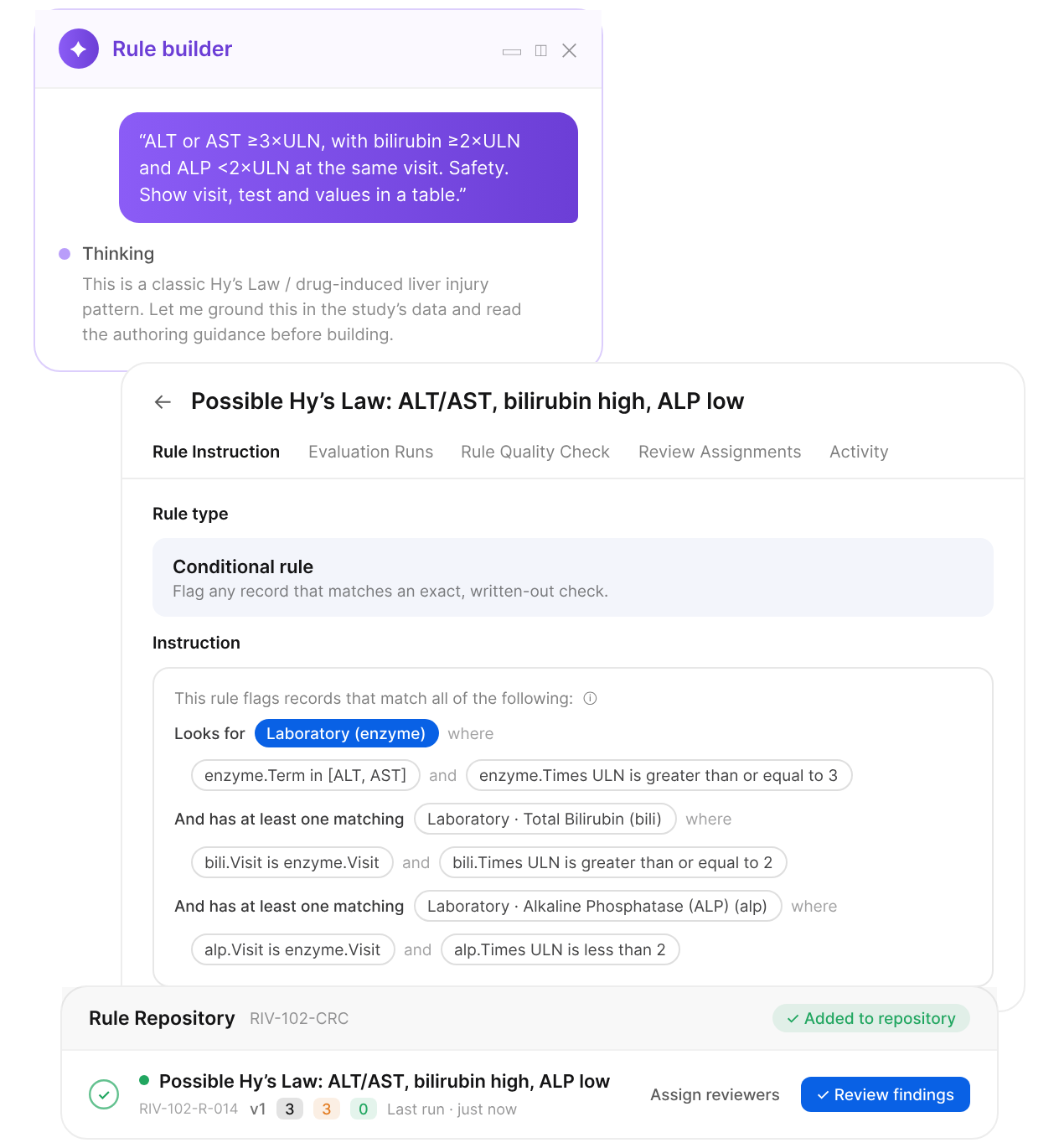
AI-Assisted Rule Builder & Library
Create complex data review rules and manage them centrally, providing the foundation to flag matching findings for review.
Configure validation logic for complex data checks across forms and domains.
Create and manage data review rules in a central repository.
Use configured rules as the foundation to flag matching findings for review.
02
Govern Rules
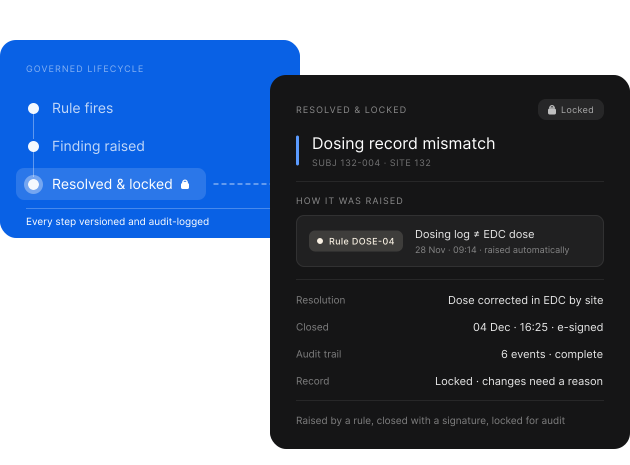
Governed Rule Lifecycle
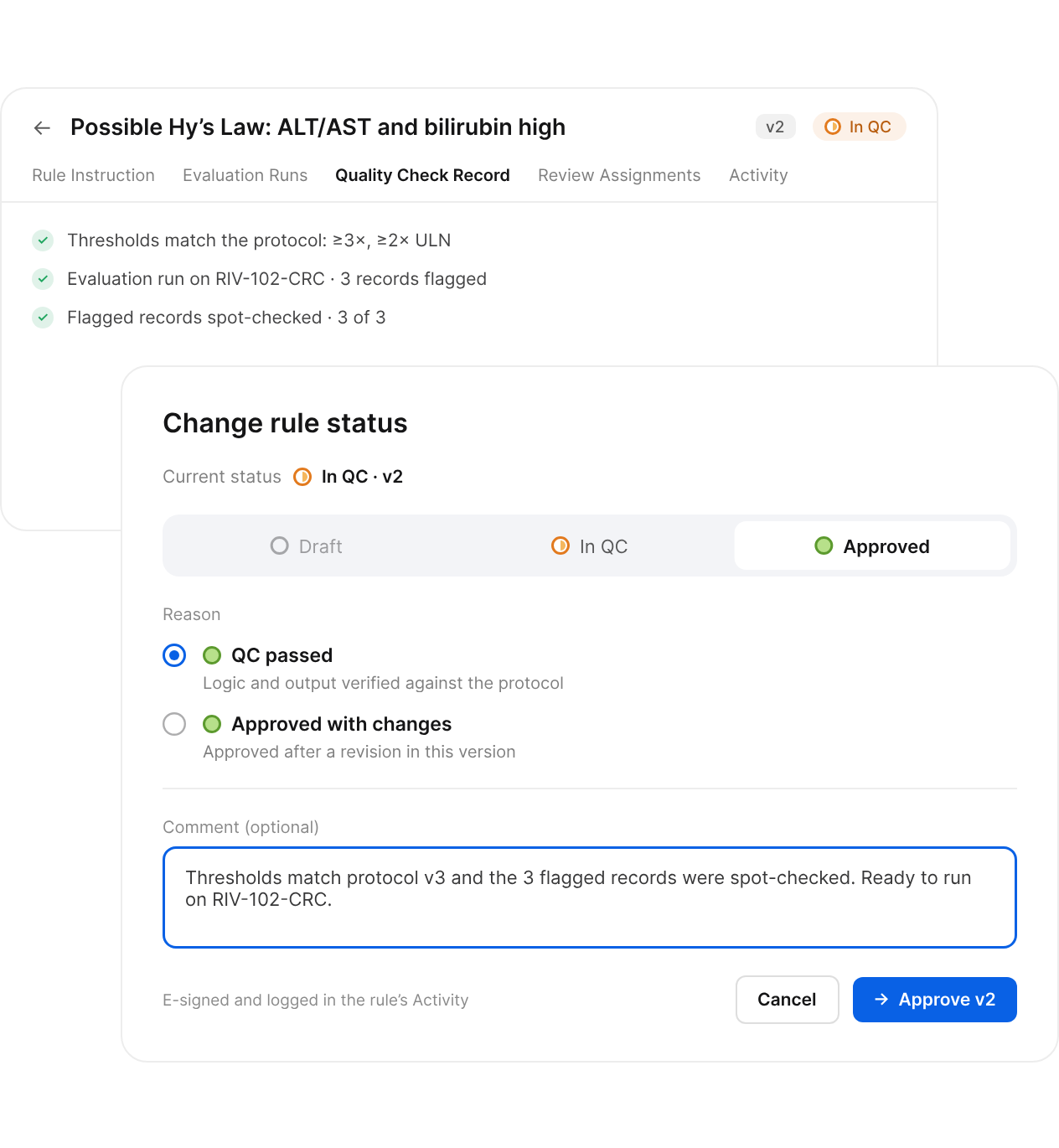
Manage every data review rule through a governed lifecycle with version control, QC, approval history, and validation.
Track rule versions and changes as review logic evolves.
Manage QC, validation and approval while preserving a traceable history.
Centrally accessible for operational clarity, all exportable for the TMF.
03
Surface Findings
Findings Synced to Source Status
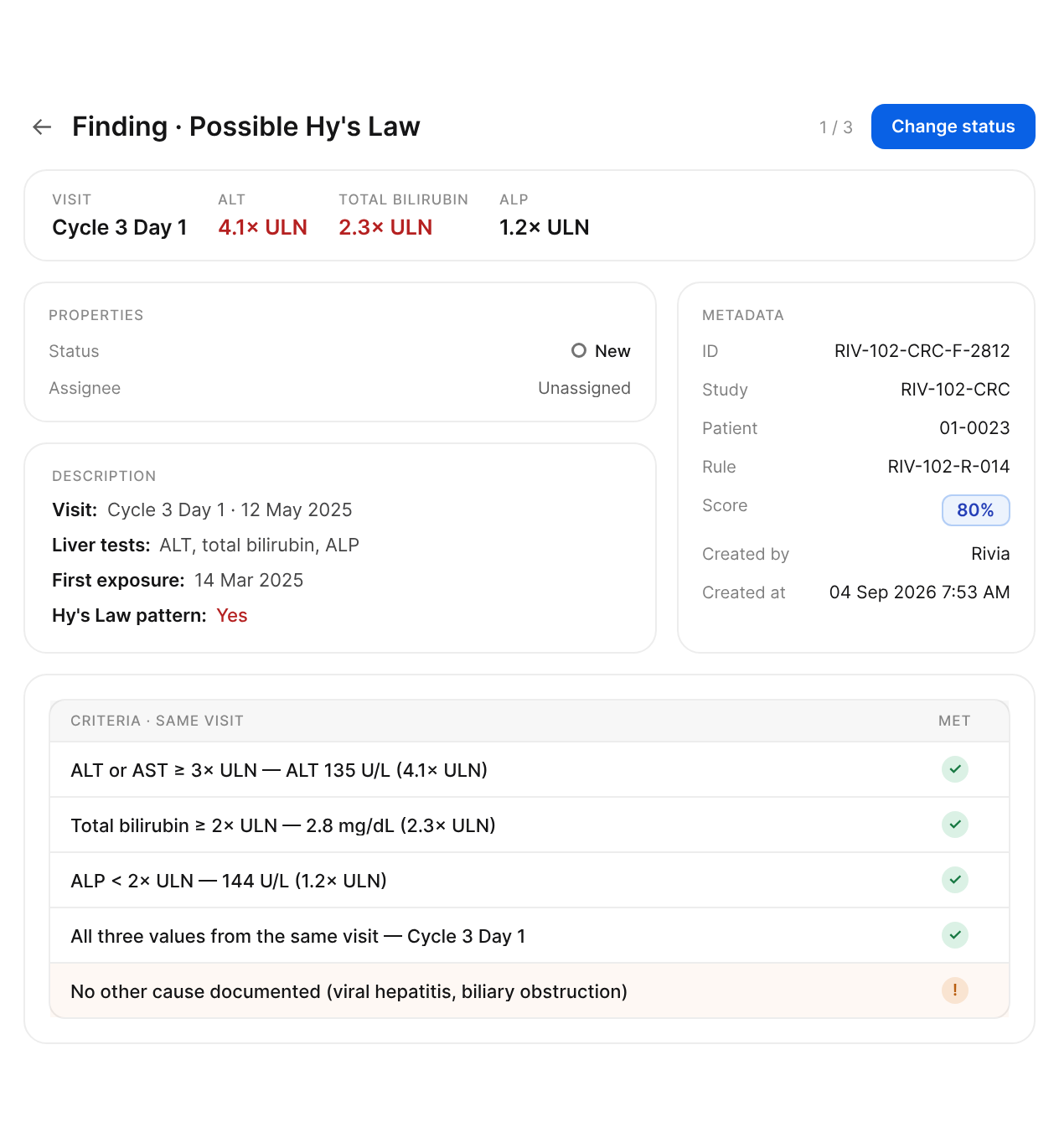
Data Findings evaluates trial data against configured rules, surfaces matching findings for review, and updates their status as source data changes.
Apply configured review logic to clinical trial data.
Flag data that meets rule conditions so Data Managers know what requires review.
Automatically update finding status as the underlying source data changes.
04
Resolve Findings
Resolution Workflow
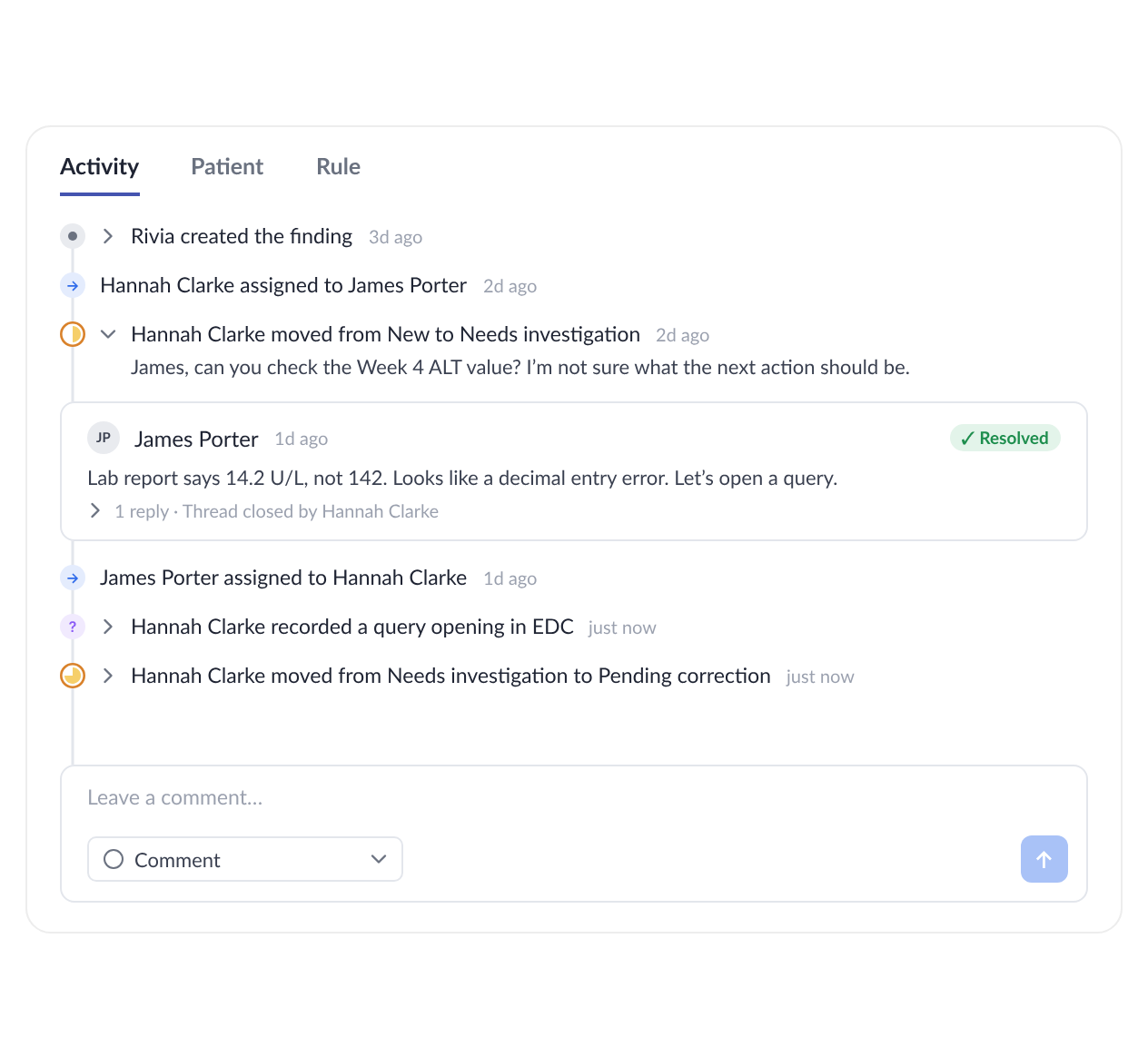
Review, assign, and resolve findings in-platform, with status tracking and a complete audit trail of decisions and actions.
Bring surfaced findings into a structured review workflow.
Assign findings and keep ownership and status visible throughout review.
Resolve findings with a complete audit trail of decisions and actions.
Real Results from Clinical Teams









Conviction & Trust
Built for Clinical Trials
Security, quality, privacy and traceability are built into how Rivia operates.
Certified & Compliant
✓
ISO 27001
✓
ISO 9001
✓
ICH GCP E6(R3)
✓
GDPR
✓
FDA 21 CFR Part 11
✓
EU Annex 11
Rivia is also audited annually by independent third parties.
Security by Design
✓
AES-256 encryption at rest
✓
TLS in transit
✓
Role-based access
✓
Multi-factor authentication
Security is embedded throughout the platform, not added around it.
Your Data, Your Control
✓
Customer ownership and control
✓
Role-based access controls for authorized users
✓
Full audit trail on every change
Your trial data stays yours, and every action stays traceable.
Built for regulated trials
Access our Trust Center


Explore
Explore Related Topics
See how Data Findings connects to the broader Rivia platform and the clinical trial workflows it supports.
Rivia Core
Bring clinical trial data together through source integration, ingestion, harmonization, and visualization.
Explore Rivia Core →Success Stories
See how clinical teams use Rivia to reduce manual work, speed up data review, and focus on clinical decisions.
Explore Success Stories →FAQ
Frequently
Asked Questions
What is Rivia Data Findings?
Rivia Data Findings is an AI-configurable data review module for creating complex validation rules, surfacing cross-domain issues, and managing findings in one governed workflow.
Who is Data Findings for?
Data Findings supports anyone on the study team involved in data review, from Data Managers configuring and governing the rules to Clinical Operations staff, Clinical Scientists, and Medical Monitors reviewing findings for quality.
How is Data Findings different from Rivia Core?
Rivia Core provides source integration, ingestion, harmonization, and visualization. Data Findings adds rule configuration, automated findings, and a findings resolution workflow on top of Core.
Can Data Findings support cross-form and cross-domain checks?
Yes. Data Findings is designed to support complex validation rules across forms and data domains, where review often otherwise requires programming and manual effort.
How are rules governed?
Rules can move through version control, QC, approval history, and validation as part of a governed lifecycle.
How are findings resolved?
Findings can be reviewed, assigned, tracked, and resolved in-platform, with an audit trail of decisions and actions.


Rivia steers therapeutic innovators to breakthroughs in clinical trials


