Accelerating Database Lock: How Continuous Clinical Data Review Shortens the Path from LPLV

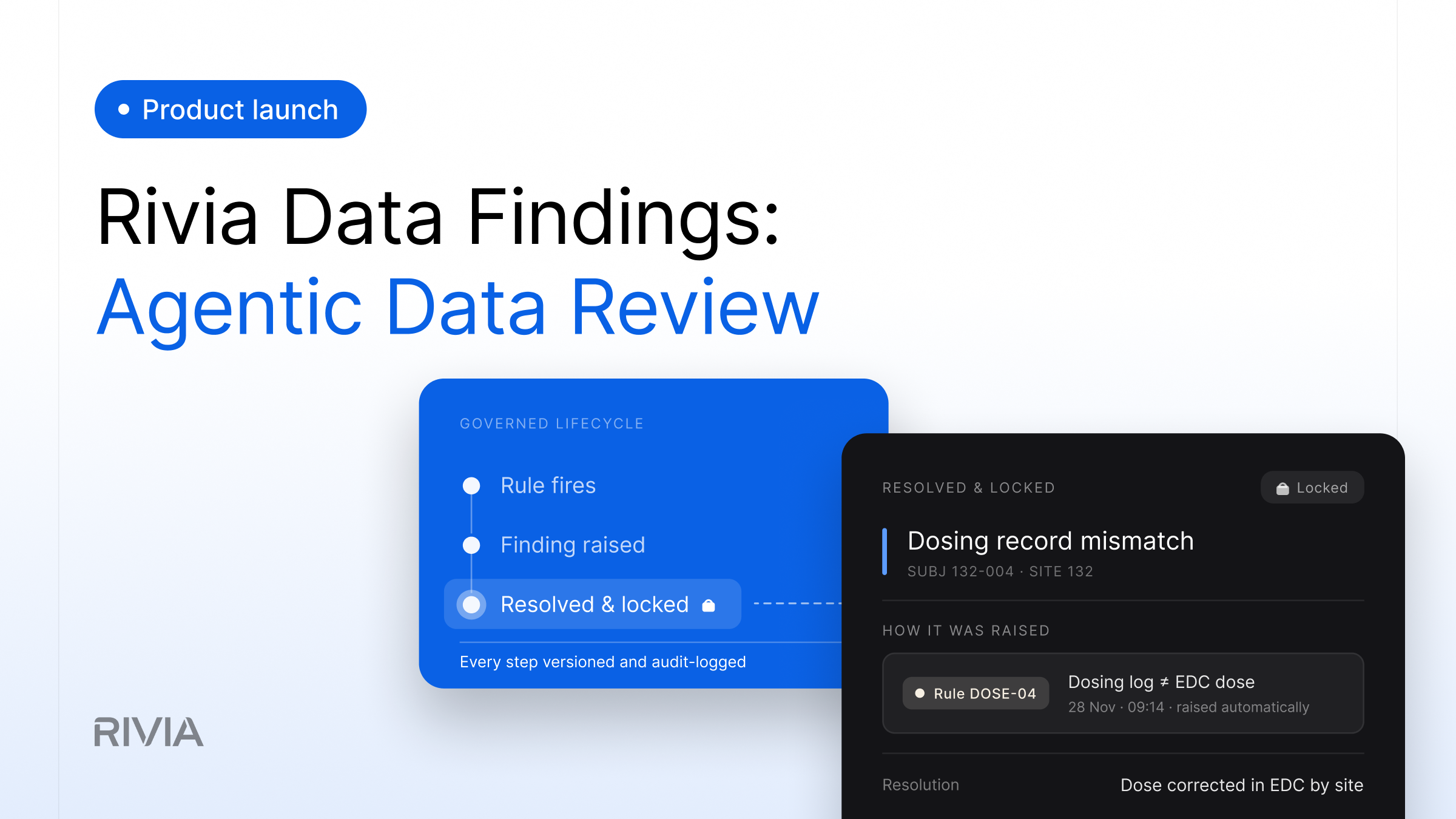
Scancell expects to cut end-of-study data cleaning in its Phase 2 trial by 75%, from eight weeks to two, using Rivia’s newly launched Data Findings. That could bring database lock forward by six weeks.
Data Findings gives clinical data managers the tools to build complex checks with AI, run them against incoming trial data and manage findings through resolution. Built on Rivia Core, it brings those activities into one workflow.
The aim is to resolve more issues during the study and reduce the work waiting at the end.
When data review falls behind
EDC edit checks catch many issues as data is entered. More complex checks across forms and domains can still require custom programming or manual listing review.
Programming requests join a queue. Findings move between listings and spreadsheets. New data keeps arriving. Unresolved issues can carry through to Last Patient Last Visit (LPLV), extending the work needed before database lock.
The volume is growing. Tufts CSDD research found that Phase 3 protocols collect an average of 5.9 million data points, up 11% annually since 2020 (1).
Data Findings helps teams keep complex review running throughout the study. A data manager describes a check in plain language, reviews the generated logic and takes the rule through quality control and approval. Approved rules then flag findings as new data arrives.
For Joe Thornton, VP Clinical Operations at Scancell, the expectation is to reach LPLV with “substantially improved data quality and the potential to bring forward end-of-study database lock by six weeks.”
How Data Findings works
Data Findings connects rule creation, governance and resolution in four steps.
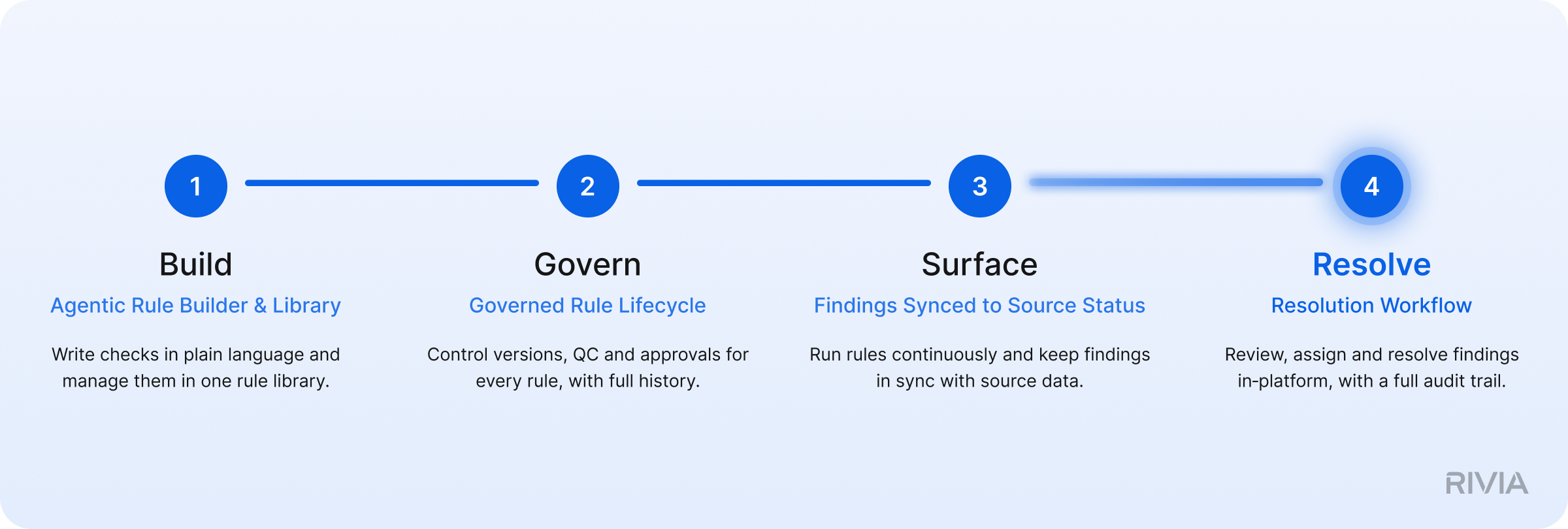
1. Build the rule
An adverse-event record indicates a dose reduction, but the dosing record shows no change.
A data manager describes that check in plain language. The AI-assisted rule builder generates a draft rule in a central repository. The logic stays visible for review, editing and refinement.
2. Govern the rule
Rules move through quality control and approval, with version history preserved. Teams can see who approved a rule, when it was approved and how its logic has changed.
3. Surface findings
Approved rules check incoming trial data and flag matching records for review. Findings stay linked to the source, with their status updated as the underlying data changes.
4. Resolve findings
Teams review, assign and resolve findings in the platform. Lead data managers can see ownership and status, while an audit trail records decisions and actions.
A consistent data foundation
Data Findings runs on Rivia Core, which integrates and harmonizes data from EDCs, labs and vendor systems. Review rules work against a consistent view of the trial across those sources.
The workflow also preserves the history behind the review: how rules were configured and approved, what they flagged and how findings were resolved. That traceability supports the emphasis on sponsor oversight and data integrity in ICH E6(R3) (2).
Resolve more before LPLV
For clinical data teams, the objective is practical: reach LPLV with fewer unresolved findings and a clear record of the review already completed.
Data Findings is available now. Explore Data Findings and contact us to see how it could support your next database lock.
Sources
[1]: Getz K, Botto E, Arques AC, et al. Insights Informing Strategies for Optimizing the Collection of Clinical Trial Data. Ther Innov Regul Sci. 2026;60:563–574. link.springer.com
[2]: ICH E6(R3) Guideline for Good Clinical Practice, Principles and Annex 1, finalized January 2025. ema.europa.eu
Featured Testimonials
Read More
Latest News



Rivia steers therapeutic innovators to breakthroughs in clinical trials


